If you want a town that feels green, open, and quietly connected to the land, Weston stands out right away. Its country-style character is not just about large lots or scenic drives. It comes from years of land protection, working farms, trail stewardship, and historic preservation that still shape daily life. If you are exploring Weston as a buyer or simply trying to understand what makes it feel different, this guide will show you how its green spaces influence lifestyle, setting, and housing choices. Let’s dive in.
Why Weston Feels Country-Style
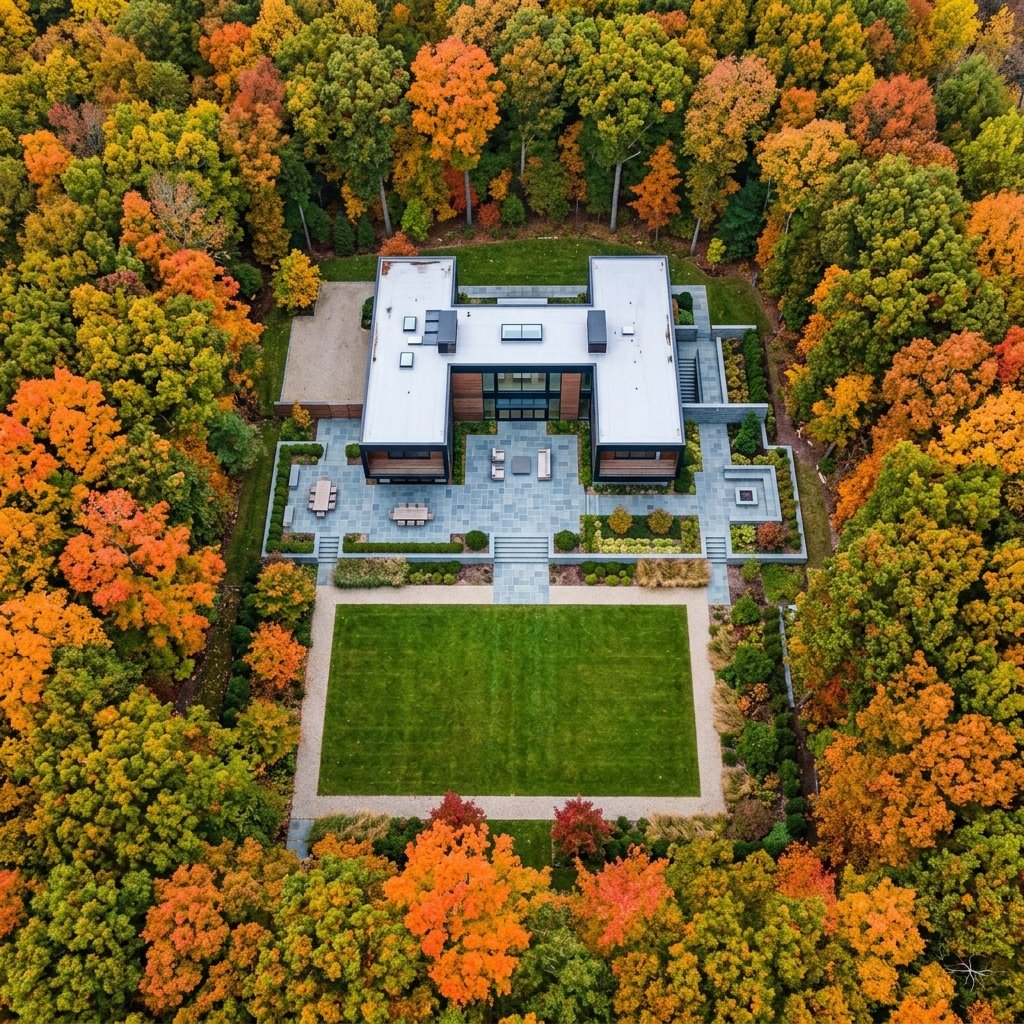
Weston’s rural-suburban character is grounded in protected land. Town sources describe a conservation system of about 1,800 to 2,000 acres of protected land that is open to passive recreation, connected by roughly 90 miles of trails, fire roads, and outlooks. That scale matters because it creates a visible landscape of woods, meadows, ponds, and scenic corridors that you can experience throughout town.
This green identity goes beyond conservation parcels alone. Weston’s open-space planning treats trails, farms, forests, wildlife habitat, streams, ponds, parks, playing fields, courts, and swimming facilities as part of one larger green infrastructure. In practical terms, that means the town’s outdoor character is woven into everyday life rather than limited to one park or one neighborhood.
Historic preservation also helps keep that identity intact. Weston has 10 National Register districts and one Local Historic District, which helps preserve scenic roads, old farm parcels, and estate landscapes as part of the town’s broader setting. That continuity is a big reason Weston still reads as a place with deep landscape character.
Green Spaces That Define Weston
Jericho Town Forest
Jericho Town Forest is one of Weston’s signature open spaces. The town describes it as more than 550 acres with over 12 miles of trails through forests, fields, and wetlands. It was one of the first protected natural areas in Weston, and it remains a major part of the town’s trail system.
Jericho also highlights how connected Weston’s green network really is. From here, trails link to Ogilvie Town Forest, College Pond, the Mass Central Rail Trail, and the Bay Circuit Trail. If you value easy access to long walks, trail running, horseback riding, or simply a stronger sense of outdoor continuity, this kind of connection shapes the lifestyle.
Case Estates
Case Estates shows how Weston blends open land with historic character. The broader Case’s Corner and Case Estates landscape spans about 118 acres with farm fields, orchards, woodlands, wetlands, landscaped gardens, stone walls, farmhouses, and summer-estate buildings. It is one of the clearest examples of how preservation supports the town’s country feel.
This area also reflects a living landscape rather than a frozen one. The town notes that preservation of Hillcrest Gardens helped protect the property from suburban development, while Land’s Sake continues to steward part of its agricultural legacy. For buyers, that means Weston’s green setting is not just scenic. In places, it is still actively cultivated and cared for.
Wellington Farm
Wellington Farm offers another layer of Weston’s identity. This 35-acre farm in southern Weston includes a main house from around 1760, a 1917 farmhouse, a large barn complex, greenhouse, pigsties, fields, and stone walls. The town identifies it as one of the few working farms remaining in the community.
That matters because it reinforces the difference between a town that looks rural and one that still shows visible agricultural use. In Weston, farm buildings, open fields, and historic farmstead settings remain part of the landscape. That can be especially appealing if you are drawn to homes with a near-farm or estate-like setting.
Mass Central Rail Trail
The Mass Central Rail Trail adds a more regional recreation element to life in Weston. The town says about three miles of this former railroad corridor run through the north side of town as part of the state rail-trail plan. It gives residents another way to enjoy non-motorized outdoor access close to home.
There are also practical details that matter for daily use. Because this corridor is state-owned, dogs must be leashed there, even though some town conservation land allows off-leash use under voice control. If your lifestyle includes regular walks, bike rides, or dog outings, these small distinctions can be useful to know.
What Outdoor Living Looks Like Year-Round
Weston’s green spaces support more than one type of recreation. Town rules describe the conservation and trail system as shared-use and non-motorized, with walkers, cyclists, horseback riders, winter skiers, snowshoers, and fat bikers all part of the mix. Motorized vehicles are prohibited, which helps preserve the quieter, nature-oriented feel.
The town also maintains more than 30 conservation fields. Most are managed for plant and wildlife habitat, scenic views, and passive recreation, while a few remain in agricultural use through Land’s Sake. This mix helps explain why Weston can feel both carefully maintained and genuinely rural at the same time.
For a town known for its open landscape, Weston also offers a strong set of recreation amenities. The recreation department lists 13 athletic fields, 15 tennis courts, 4 basketball courts, and the Weston Memorial Pool, a 20,000-square-foot, 700,000-gallon pool. In winter, College Pond is used for outdoor skating when conditions allow.
Farming Still Shapes the Landscape
One of the most distinctive parts of Weston is that farming is still visible. According to the town, Land’s Sake operates an organic farm and supports the apple orchard on Concord Road, a maple-syrup project with about 400 taps in 200 trees, Green Power Farm, and community garden programming. That kind of activity helps keep the working-landscape feel present in everyday life.
For buyers, this adds depth to the idea of country-style living. You are not just seeing preserved views from the past. You are seeing an active landscape that still includes cultivation, seasonal rhythms, and stewardship. That can make Weston feel more grounded and more authentic than a purely suburban setting.
Housing Patterns Near Weston’s Scenic Land
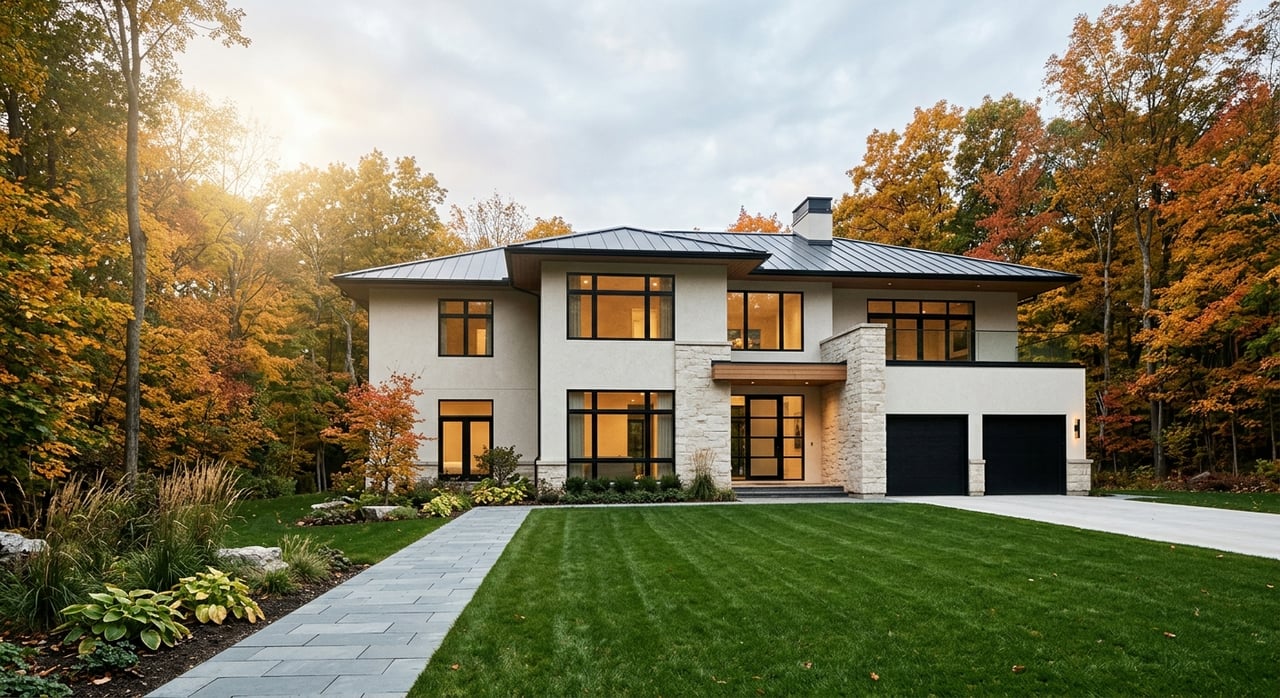
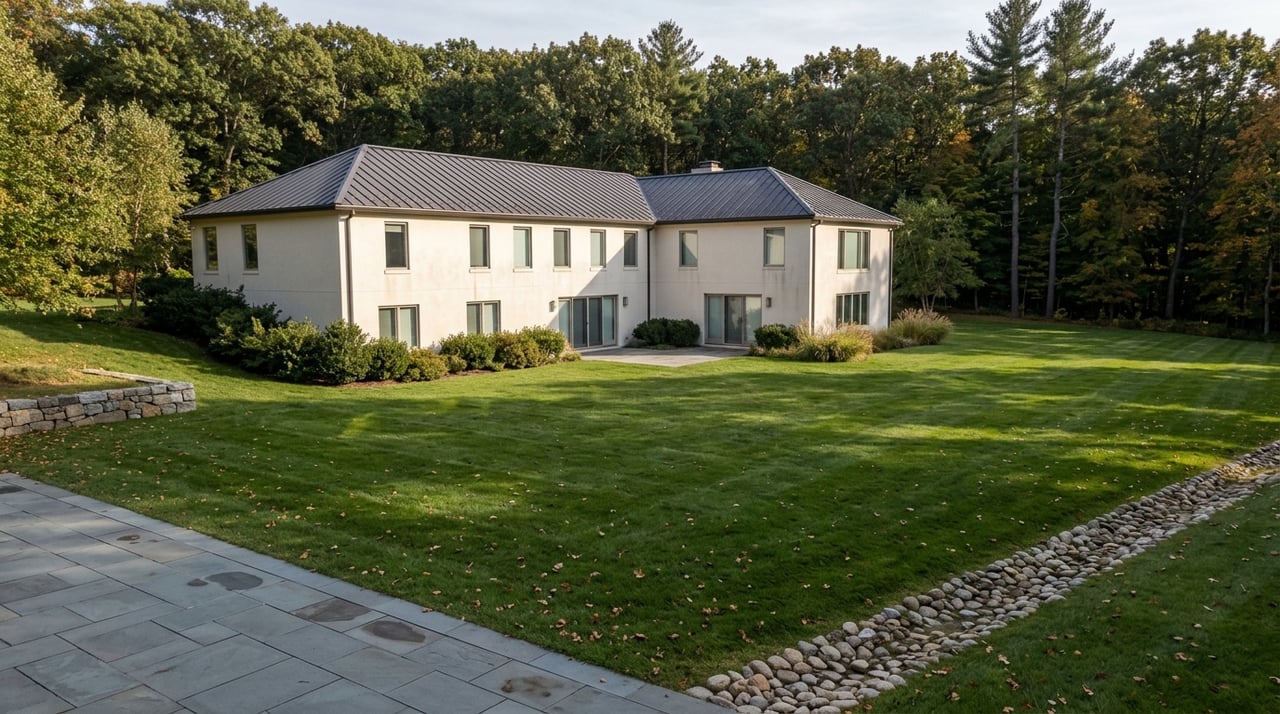
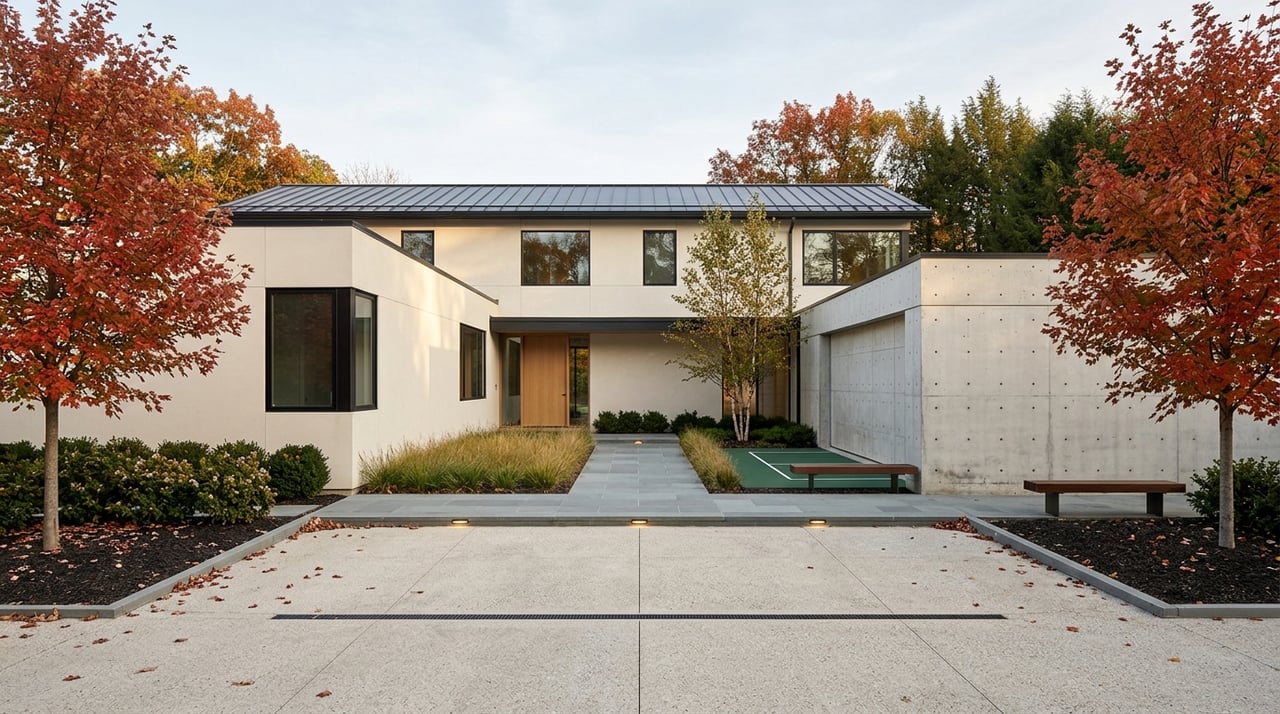
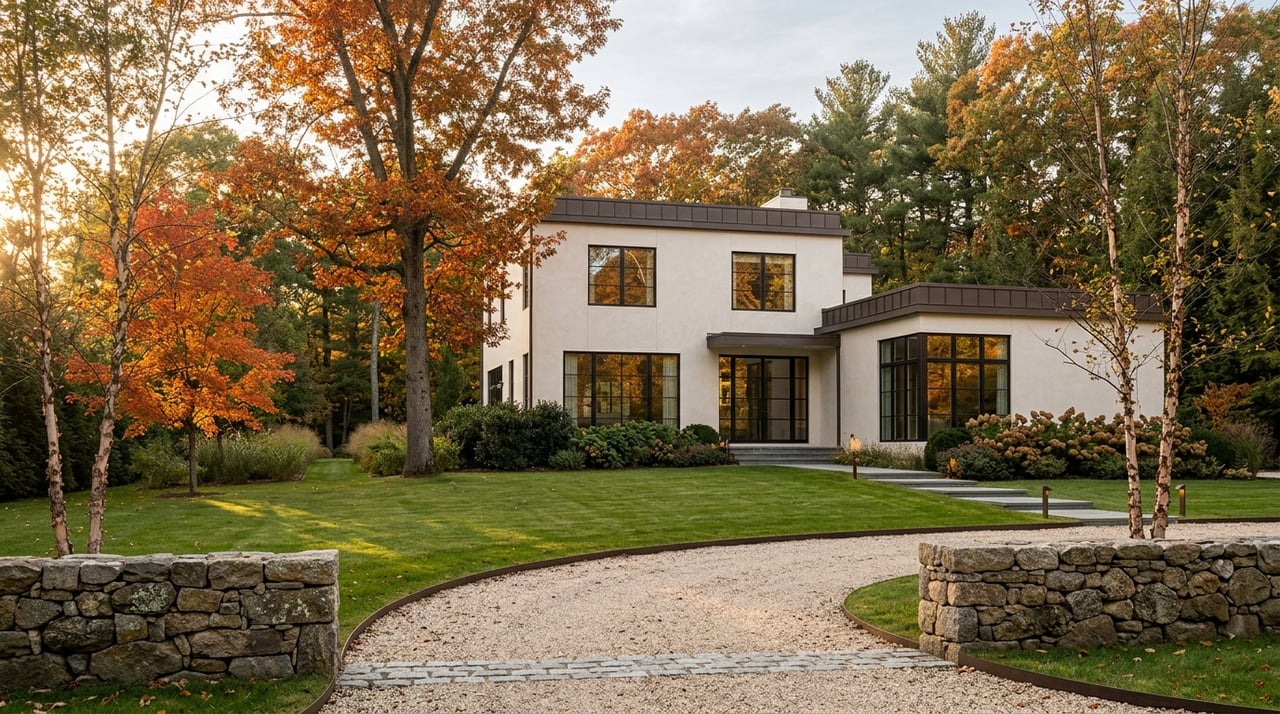
Weston does not follow a single housing pattern, and that is part of its appeal. Town sources describe a mix that includes farmhouse-scale buildings, estate houses, early-20th-century residential streets, and newer large homes on landscaped lots. That range supports a rural-suburban character with more variation than many buyers expect.
Estate Settings and Historic Landscapes
In and around Case Estates, the housing context includes farmhouses, 19th-century summer-estate buildings, turn-of-the-century residences, and architectural styles such as Colonial Revival, Federal, Greek Revival, Italianate, Queen Anne, and Shingle Style. The town also notes estate mansion, estate-worker, and middle-class housing within the same broader landscape. That mix gives Weston a layered and historically rooted feel.
Love Lane is another strong example of scenic-road living. The town describes open hay fields, horse paddocks, woodlands, stone walls, a Shingle Style mansion, and one of Weston’s largest remaining horse barns. If you picture privacy, land, and an equestrian-oriented setting, this area helps illustrate that side of Weston.
More Compact Historic Neighborhoods
Not every part of Weston is estate-scaled. Glen Road shows a more compact historic housing pattern, with early-20th-century homes on lots of roughly 0.4 to 2 acres. The town describes one- and two-story houses of about 1,000 to 3,000 square feet, including Four Square, side-gable, Dutch Colonial, and gable-front forms.
This matters if you like Weston’s landscape and location but want a different type of home setting. The town’s housing fabric includes areas that feel more neighborhood-oriented while still tying back to the larger green and historic framework.
Scenic Roads With Old and New Homes
Chestnut Street shows another version of Weston’s country character. The town describes gently rolling topography, stone walls, naturalistic landscaping, and a strong country-road feel. In some stretches, you will find large newer homes on landscaped lots, while other stretches include modest homes on smaller lots and one of the oldest surviving houses in town.
That blend is important for buyers because it shows how Weston’s appeal is not limited to one price point or one visual style. The common thread is the landscape itself, including mature trees, stone walls, preserved views, and a feeling of space.
What Buyers Often Appreciate Most
Many buyers are drawn to Weston because its rural feel comes from stewardship, not isolation. Protected land, trail connectivity, farm activity, old stone walls, and scenic roads all exist alongside suburban homes and recreation amenities. You can have access to open space without giving up the structure and convenience of an established community.
For some, that means prioritizing trail access and outdoor recreation. For others, it means looking for privacy, estate-like surroundings, or a setting near fields and historic landscapes. Weston supports several versions of country-style living, which is why understanding the specific area and property context matters so much.
If you are considering a move here, it helps to look beyond square footage alone. In Weston, the surrounding land, trail connections, road character, and preservation context can shape how a home feels just as much as the house itself. That is often what turns a property search into a lifestyle decision.
Whether you are buying, selling, or planning a move within MetroWest, local context makes all the difference in Weston. The Shulkin Wilk Group brings a polished, high-touch approach to helping clients understand not just the homes here, but the landscape and lifestyle that make Weston unique.
FAQs
What makes Weston feel more rural than other suburbs?
- Weston’s country-style feel comes from about 1,800 to 2,000 acres of protected land, roughly 90 miles of trails, visible farm activity, scenic roads, stone walls, and preserved historic landscapes.
What outdoor activities are common in Weston’s green spaces?
- Town sources describe shared non-motorized use that includes walking, cycling, horseback riding, winter skiing, snowshoeing, and fat biking.
What is Jericho Town Forest in Weston known for?
- Jericho Town Forest is known for its 550 acres, more than 12 miles of trails, and connections to Ogilvie Town Forest, College Pond, the Mass Central Rail Trail, and the Bay Circuit Trail.
Are there still working farms in Weston?
- Yes. Weston includes active agricultural land, including Wellington Farm and Land’s Sake farming activities such as an organic farm, orchard support, maple syrup production, and community garden programming.
What kinds of homes are found near Weston’s scenic roads?
- Depending on the area, you may find farmhouses, estate homes, early-20th-century houses, modest historic homes, and newer large homes on landscaped lots.
Does Weston offer recreation amenities beyond trails and conservation land?
- Yes. The town lists 13 athletic fields, 15 tennis courts, 4 basketball courts, the Weston Memorial Pool, and seasonal outdoor skating at College Pond when conditions allow.