If you are drawn to winding roads, mature trees, and homes that feel woven into the landscape, Weston’s scenic roads may stand out for all the right reasons. These streets offer more than pretty views. They reflect a long-standing preservation approach that shapes how the town looks, feels, and evolves over time. If you are considering a move to Weston, understanding these roads can help you choose an address that fits your lifestyle and priorities. Let’s dive in.
What Makes Weston’s Scenic Roads Unique
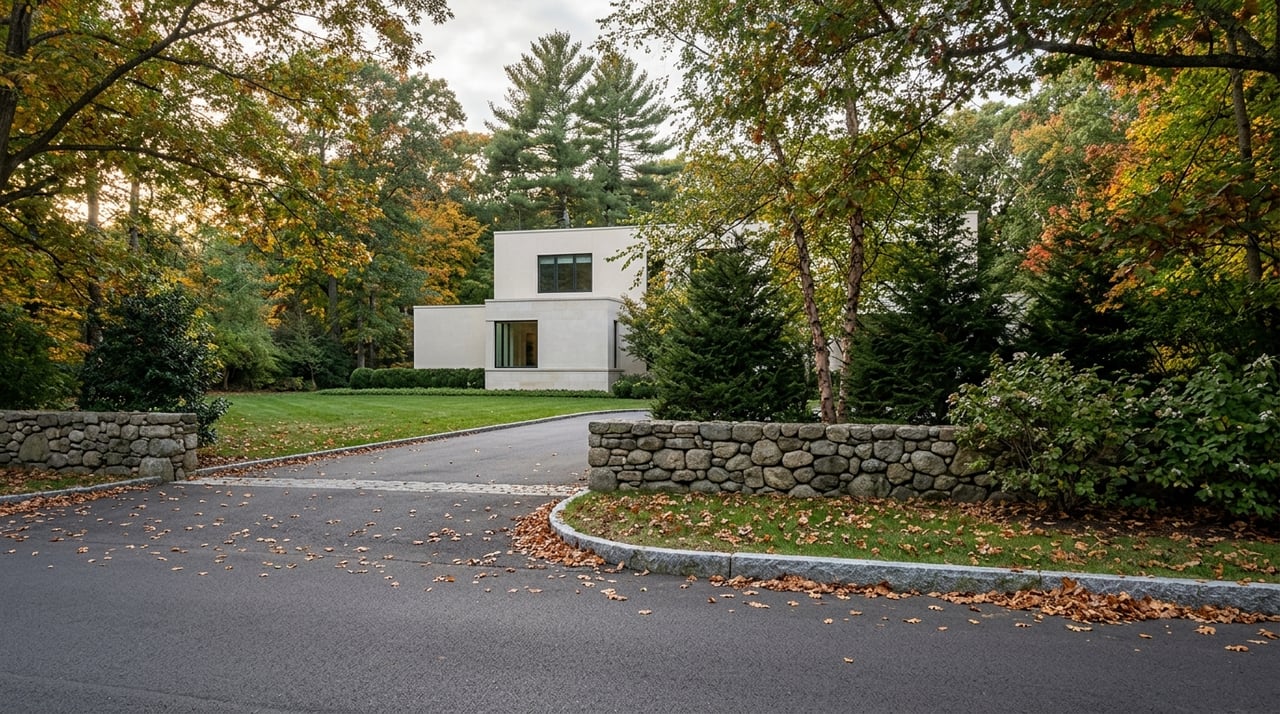
Weston describes its scenic roads as narrow, curving roadways with mature street trees, stone walls, naturalistic landscaping, and informal planting within the right-of-way. According to the town’s scenic roads overview, this network also reflects Weston’s early road system and the historic neighborhoods that developed along it.
That matters when you are house hunting. In Weston, the road itself is often part of the appeal. The setting can shape your sense of arrival, privacy, and connection to the town’s historic character.
Scenic Road Rules to Know
Weston’s scenic-road framework is also a preservation tool. The town’s scenic-roads guidance explains that the general bylaw protects historic stone walls and regulates tree removal within the right-of-way.
Some roads are subject to added zoning provisions. The same town guidance notes that North Avenue, South Avenue, and Route 20 fall under zoning scenic-road provisions, where new construction along those roads requires site plan approval.
For buyers, this means scenic-road living often comes with more oversight than a typical suburban street. That oversight can help preserve the character that draws people to these corridors in the first place.
Architectural Character Along Scenic Roads
Weston encourages a regional New England design vocabulary in scenic-road settings. The town’s architectural guidance highlights Colonial, Greek Revival, Mid-19th Century Farmhouse Adaptations, and Shingle Style as strong fits where rural character is the goal.
At the same time, Weston’s historic-area resources show that the visual mix is broader than many buyers expect. Boston Post Road includes strong Georgian and Federal examples, while Summer Street features Italianate, Queen Anne, Colonial Revival, English Cottage, and Tudor homes. In the Maple Road and Wellesley Street area, the mix includes Colonial, Greek Revival, Queen Anne, and Colonial Revival houses.
The common thread is not one exact style. It is a coordinated relationship between homes, landscape features, and the streetscape.
Landscape Features Add Appeal
In many scenic-road areas, the setting goes beyond the house itself. Weston’s architecture and historic-area materials highlight barns, outbuildings, orchards, specimen trees, and stone walls as visible parts of the overall character.
For example, the Summer Street area includes a notable bank barn seen across a sloping orchard, while the Case Estates area combines homes with barns, mature plantings, and a horticulturally significant landscape. If you value a property with visual depth and a strong sense of place, these details can be a meaningful part of the experience.
Privacy Looks Different on Different Roads
One of the biggest misconceptions about Weston is that every scenic-road property feels the same. In reality, the town’s lot patterns and setbacks vary widely, and that creates very different living environments from one corridor to another.
Weston’s zoning requirements show that residential districts already allow generous minimum lot sizes, ranging from 20,000 to 60,000 square feet, with frontage minimums from 150 to 250 feet depending on district. Historic scenic-road corridors often exceed those standards or vary significantly from parcel to parcel.
Some Areas Feel Estate-Like
On certain roads, larger parcels and deeper setbacks create a more secluded feel. Weston’s preservation guidance notes that some Boston Post Road properties sit far back from the street on substantial land holdings, including one documented property with 47.5 acres. That kind of setting can feel private and expansive.
Tree cover also plays a major role. According to the town’s guidance on preserving trees and buffers, even a 10-foot buffer can make a road feel as though it runs through the woods because native trees and shrubs screen the homes behind them.
Other Areas Feel More Compact and Historic
Elsewhere, scenic-road living can feel more village-like. The town’s descriptions note that Glen Road lots range from about 0.4 to 2 acres with 40- to 50-foot setbacks, while the Maple Road and Wellesley Street area ranges from about 1/4 acre to 2 1/2 acres with a median of 1/2 acre and similar setbacks.
North Avenue presents another variation. The town describes smaller lots and 20- to 40-foot setbacks there, creating a more compact historic appearance. As outlined in the town’s historic area descriptions, scenic-road living in Weston is not one single format. Some addresses feel secluded and spread out, while others feel more closely knit to the street.
Access to Open Space Is a Major Advantage
For many buyers, the appeal of Weston’s scenic roads extends beyond the property line. The town says Weston has over 2,000 acres of conservation land and more than 100 miles of trails, with maps available through its walking and trails resources.
That level of outdoor access can shape everyday life. Depending on where you live, trails, woodlands, and conservation areas may feel integrated into your routine rather than reserved for occasional weekend use.
Local and Regional Trail Connections
Weston also connects to broader trail systems. The town’s Bay Circuit Trail information notes that Weston sits on section 7 of the Bay Circuit Trail, linking the town to Concord, Lincoln, and Wayland.
The same resource explains that the Mass Central Rail Trail runs for three miles through the north side of Weston, with access points off Church Street, Town House Road, and Concord Road. If outdoor access is high on your list, that kind of connectivity may be a major plus.
Scenic Roads Near Significant Open Space
Some of Weston’s scenic-road areas are especially tied to open land. The Case Estates Area covers about 118 acres, with more than 100 acres remaining undeveloped, including fields, woodlands, orchards, wetlands, gardens, barns, and specimen plantings.
Sudbury Road offers another example. Weston describes it as a narrow, winding country road in a remote northwest corner of town, with conservation land fronting and backing many of the parcels in the documented stretch. If you are looking for a setting where landscape plays a leading role, these areas may deserve a closer look.
What Buyers Should Consider Before Choosing One
Weston’s scenic roads can be a great fit, but they are not interchangeable with every other suburban setting. If you prefer highly formal landscaping, wider roadways, or a more conventional newer-street pattern, some scenic-road locations may feel less aligned with your preferences.
The town’s preservation guidance points to a consistent emphasis on historic character, screened views, and strong ties to conservation land. For many buyers, that is exactly the appeal. For others, it is a reminder to think carefully about how you want your home and street to function day to day.
A smart home search in Weston starts with matching the road environment to your lifestyle. You may want estate-like privacy, a more compact historic setting, or direct access to trails and open space. Each can exist within Weston’s scenic-road network, but not always on the same block.
If you are exploring Weston and want guidance on which areas best match your goals, The Shulkin Wilk Group can help you navigate the town with a local, strategic perspective and a high-touch approach.
FAQs
What are scenic roads in Weston, MA?
- Weston defines scenic roads as narrow, curving roads with mature trees, stone walls, naturalistic landscaping, and informal planting that reflect the town’s early road network and historic neighborhoods.
Do Weston scenic roads have special rules for homeowners?
- Yes. Weston regulates tree removal and changes to historic stone walls in the right-of-way, and some roads such as North Avenue, South Avenue, and Route 20 have additional zoning provisions that require site plan approval for new construction.
Are homes on Weston scenic roads all large estate properties?
- No. Weston’s scenic-road areas vary widely, with some parcels feeling estate-like and private, while others have smaller lots and setbacks that create a more compact historic streetscape.
What architectural styles are common along Weston scenic roads?
- Town guidance highlights regional New England styles such as Colonial, Greek Revival, Mid-19th Century Farmhouse Adaptations, and Shingle Style, while historic-area resources also show Georgian, Federal, Italianate, Queen Anne, Colonial Revival, English Cottage, and Tudor examples.
Do Weston scenic roads offer access to trails and conservation land?
- Yes. Weston has over 2,000 acres of conservation land and more than 100 miles of trails, and several scenic-road areas are closely connected to open space, including the Case Estates area and roads near regional trail links.
How can a buyer choose the right scenic road in Weston?
- The best approach is to compare each road’s lot pattern, setbacks, privacy, landscape character, and access to open space so you can find the setting that best matches your day-to-day lifestyle.